The Arts and Creativity to poeticise everyday life.

Jazz as Urban Sensuality
From Montreux to Johannesburg, from London to Tokyo, jazz moves through cities like a sensitive substance: music of the evening, of cafés, of thinking bodies and standing memories.
REPORTAGESART OF LIVING
Musarthis Team
6/27/20267 min read
Mardès, a house of publishing, culture, and transmission
Mardès is an inclusive and modern house that edits poetry collections, essays, magazines, and works on the art of living. It also creates cultural and artistic events that foster reflection and sharing.
Its mission is twofold: to edit and to transmit — transmitting poetry, thought, and the gestures of daily life that ease existence and enrich sensitivity.
Through its support, several Musarthis contents remain freely available, affirming a generous and elegant vision of culture.
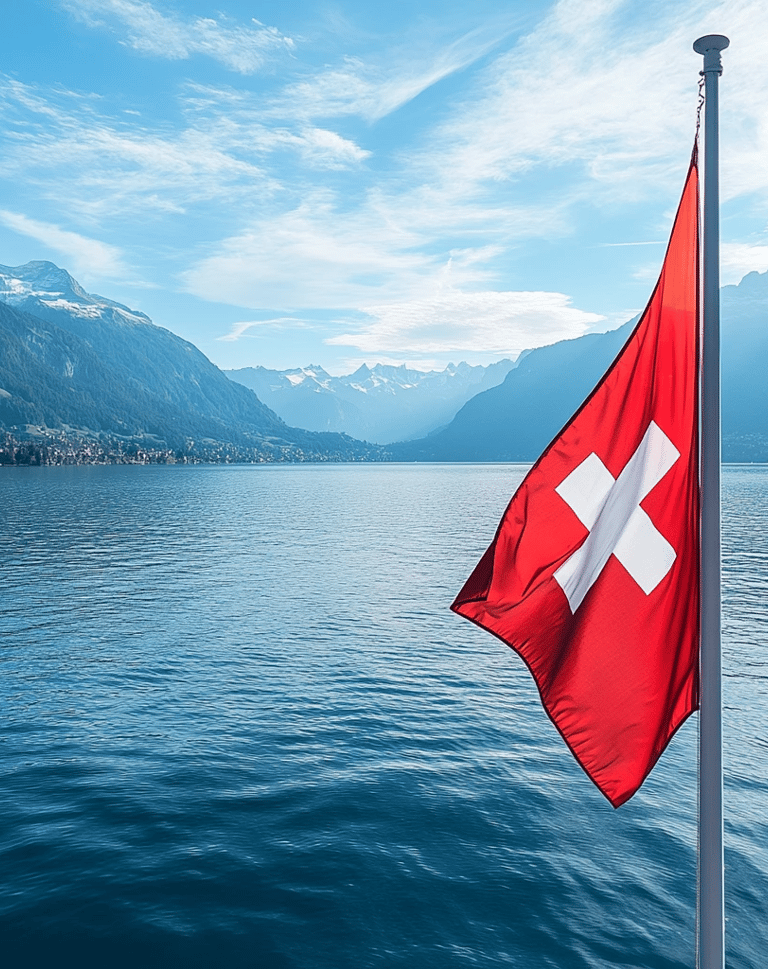
This article is offered freely, with the support of Mardès, Swiss publishing and cultural house, and Marlena’s Code, Swiss house of elegance and poetic high perfumery.
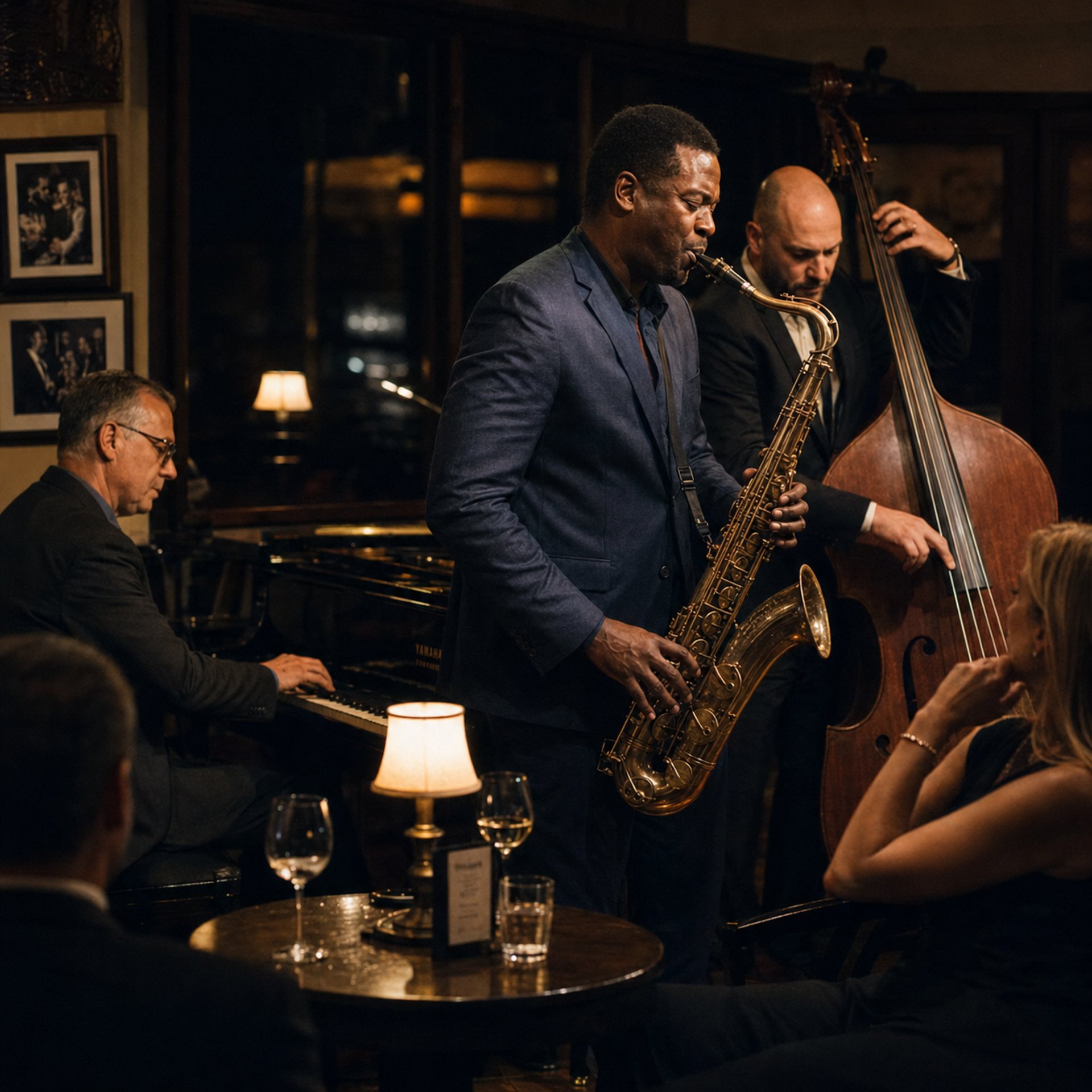
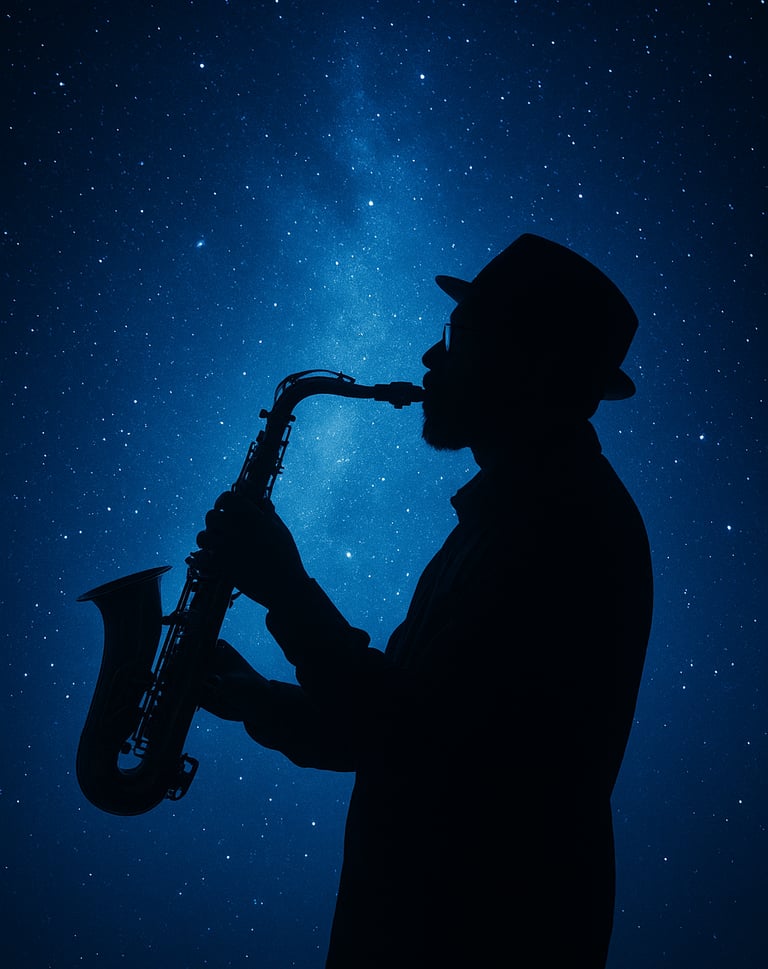
Jazz belongs to deep evenings, to cafés whose tables still keep the warmth of hands, to rooms where a lamp remains lit beside an open book, to rain-washed cities that turn their avenues into surfaces of ink. Its presence asks for neither emphasis nor monument. A double bass resting against a dark wall, brushes grazing a drum kit, a saxophone descending into the air like a warm fabric are enough to alter the density of a place.
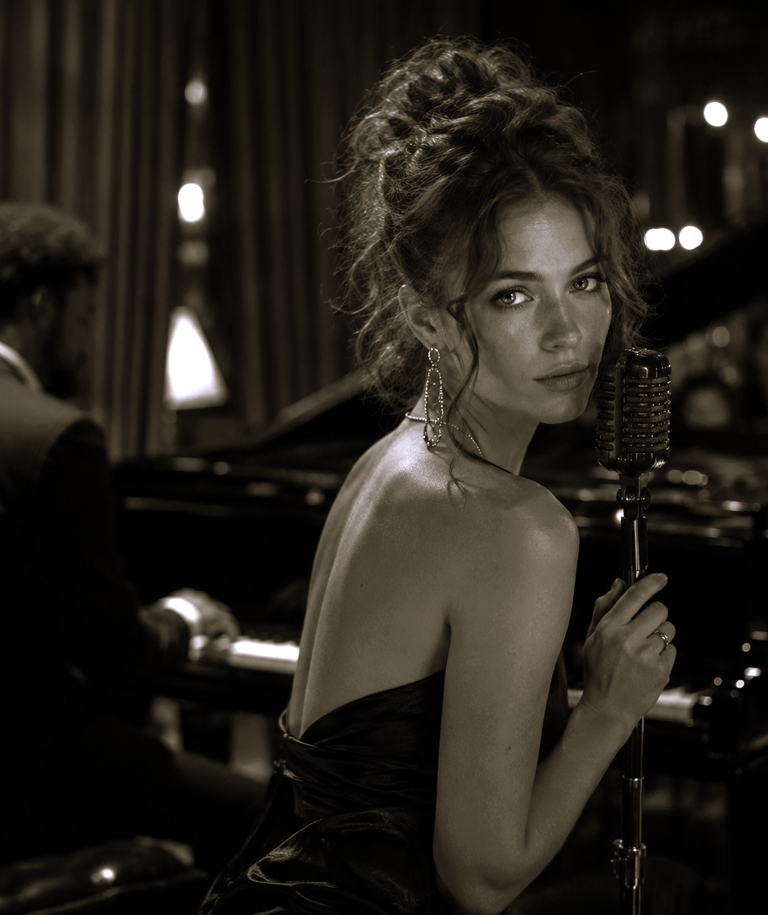
This music has a rare civility. It does not seek to dominate the city; it polishes its angles, softens its hours, reveals its secret materials. Under its passage, cafés cease to be mere refuges from the cold. Rooms cease to be simple withdrawals. Rainy streets gain a new, almost cinematic flesh, made of reflections, restrained footsteps, windows crossed by thoughts that have not yet found their sentences.
Jazz speaks to bodies that think as much as they feel. A displaced rhythm, a blue note, an almost imperceptible return invite the mind to stop walking straight ahead. Thought bends, turns aside, breathes differently. The body understands before words. It perceives the suppleness of a melodic line, the modesty of a silence, the slight burn of a brass instrument. Jazz does not install an emotion; it offers it a form fine enough not to damage it.
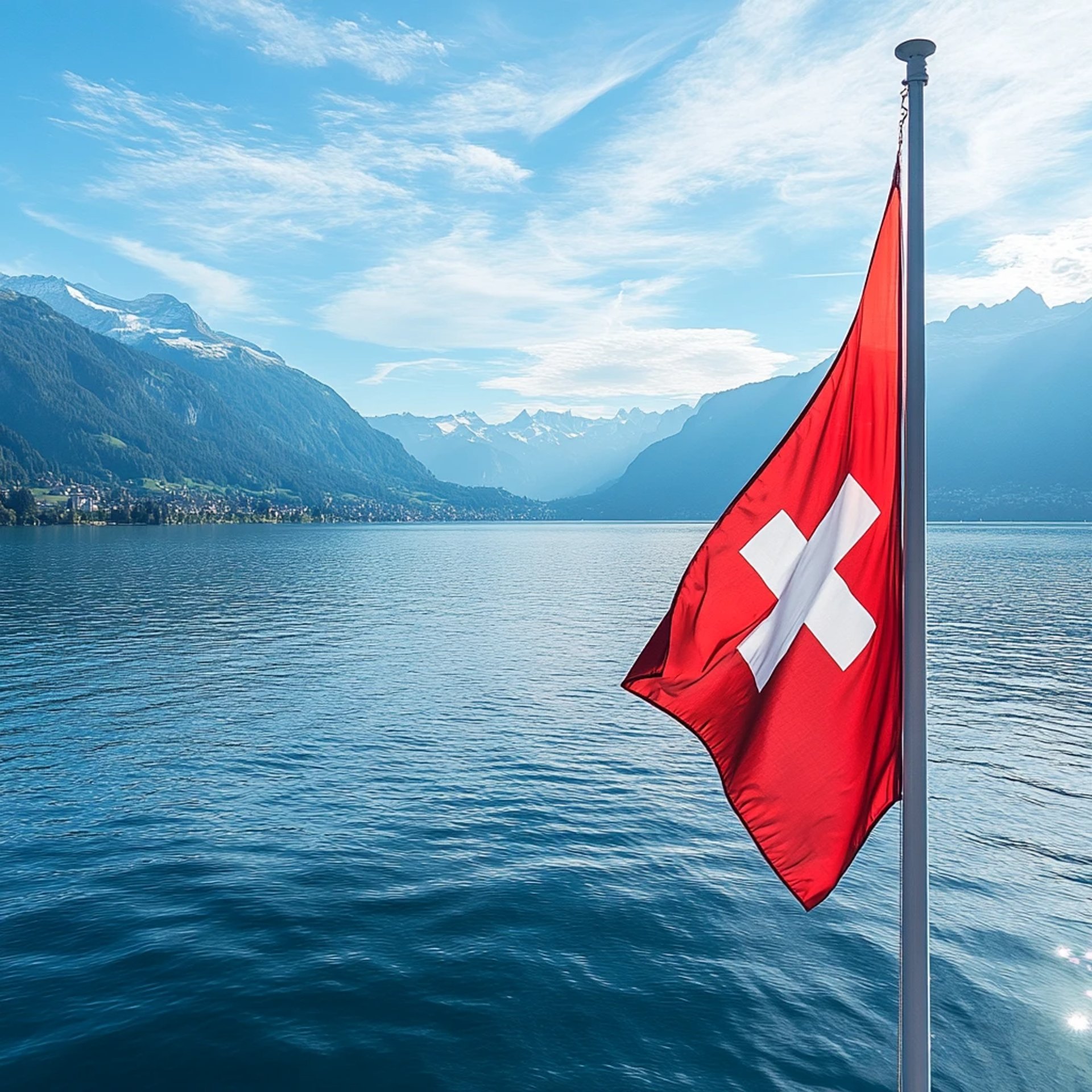
In Switzerland, Montreux gave jazz a shore. Created in 1967 around Claude Nobs, with Géo Voumard and René Langel, the Montreux Jazz Festival placed this music within a landscape where Lake Geneva is never a simple backdrop. In the evening, the town seems to move toward the water with its quays, its hotels, its lights resting on façades, its voices arriving in several languages, its footsteps slipping between stages and terraces. Jazz takes on a lacustrine bearing there: it is not merely played, it circulates in the air, in the reflections, in that very Swiss way of receiving intensity with precision, without unnecessary noise.
In Montreux, the stage is not only imagined before an audience. It extends outside, in the brushing of conversations, in illuminated shop windows, in the presence of the mountains gently closing the horizon. A saxophone note seems able to reach the surface of the lake; a deep voice appears to remain suspended between water and night. The festival possesses this rare grace: it gives jazz international breadth without taking away its intimacy. The world arrives there, but the place keeps its own breathing.
In London, Ronnie Scott’s preserves a tighter elegance, almost velvety. Soho gives it its dense nights, its façades, its discreet humour, its way of holding intensity without impoverishing it. Founded in 1959 by saxophonists Ronnie Scott and Pete King, the club carries a magnificent idea: jazz as a place on a human scale, table close to stage, breath close to glass, an audience gathered in an almost tactile attention.
In the United States, New Orleans remains one of the historic cradles of jazz, nourished notably by African American communities, ragtime, blues, brass bands, religious songs, marches and various musical circulations. New York, in turn, gives it a nervous verticality. Greenwich Village, Manhattan, the clubs, the stairs, the neon lights, the streets still active late into the night: everything there favours an electric presence. The Blue Note, established in Greenwich Village since 1981, carries this tradition of the club where music, table and close attention form one shared experience.
America also reminds us that jazz carries a history of freedom, dignity and dialogue between cultures, a force recognised by UNESCO through International Jazz Day. This recognition does not remove anything from the genre’s sensuality; rather, it recalls that a music born from improvisation, historical wounds and collective invention can cross continents without losing its inner pulse.
Africa cannot be reduced to a geographical stop. It remains one of the deep matrices of jazz, through the memory of rhythms, songs, constrained then creative bodies, and sorrows changed into sonic power. In South Africa, Johannesburg gives this history a particular density. Sophiatown, long associated with Black artistic effervescence, music, dance, writers, musicians and nights crossed by political danger, still carries the image of jazz lived as a vital presence. In the townships, sound was not only a matter of stage; it became a way of holding on, of recognising one another, of preserving a dignity apartheid sought to confiscate.
From Johannesburg to Cape Town, South African jazz accompanied scenes, exiles, struggles and forms of artistic survival. One imagines it in a dense room, in the warmth of brass instruments, in hands close to glasses, in gazes that know what music protects. This history has an ardent gravity: it can dance with nobility, weep without dissolving, raise darkness to the rank of consciousness. Here, jazz does not only soften manners; it keeps a part of the world standing.
In Addis Ababa, Mulatu Astatke’s Ethio-jazz opened another path, between Ethiopian modes, Latin pulse, improvisation and urban modernity. Trained in London, New York and Boston, Mulatu Astatke blended jazz, Latin influences and Ethiopian music to create an immediately recognisable sonic language. Africa thus reminds us that jazz does not merely travel; it carries memories, resistances and sovereign elegances.
From this African memory, jazz continues its movement toward other latitudes, without losing this first link between rhythm, freedom and embodied presence. Australia brings another geography. Melbourne, city of laneways, cafés, contemporary stages and artistic circulations, welcomes jazz with a different amplitude. Improvisation finds there an open climate, crossed by experimentation, encounters and present-day gestures. The Melbourne International Jazz Festival belongs to this Australian scene of jazz and improvised music.
In Wangaratta, in the state of Victoria, jazz leaves the metropolis and reaches another scale of territory. The local festival connects music with regional lands, halls, communities and less central presences. This Australian circulation recalls that jazz does not belong only to consecrated capitals; it knows how to settle in secondary cities, interior landscapes, places where music creates a shared attention.
After Australia, Asia opens another sensitive cartography of jazz: more vertical, more precise, carried by cities where listening takes on a composed elegance. In Tokyo, Blue Note Tokyo, opened in Aoyama in 1988, extends the spirit of the New York club into a capital where sonic attention sometimes seems worked like a lacquered surface. Japanese jazz often possesses this goldsmith’s precision: the smallest silence appears held, the smallest note placed with an almost calligraphic delicacy.
In Seoul, the Seoul Jazz Festival, active since 2007 and associated notably with Olympic Park, places jazz within a dense, vivid city crossed by youth, cafés, parks, cultural nights and rapid architectures. In Singapore, the Singapore International Jazz Festival, launched in 2014 at Marina Bay Sands, connects jazz to water, towers, clear lines and very contemporary hospitality. In these cities, jazz does not lose its interiority; it gains visual sharpness, like a sonic thought placed upon moving metropolises.
This urban sensuality is therefore not a pleasant atmosphere. Jazz is not a sonic perfume placed upon the city to make it more seductive. Its beauty comes from its art of friction. A harmony may contain a delicate unease. A silence may prolong a desire. A syncopation may shift the inner walk of a being. Jazz softens manners because it does not brutalise what trembles; it gives emotion a bearing, fatigue a curve, melancholy a nobility.
In a café, it makes solitude more habitable. In a room, it gives silence a substance. Under the rain, it turns the city into a visual confidence. It suits beings who do not need to raise their voice to exist, long thoughts, the ends of day that ask for less noise and more tact.
Jazz as urban sensuality designates this way of hearing the city through the skin as much as through the mind. Montreux offers it water and the memory of musical summers. London gives it Soho, its low tables and dense nights. The United States restores its historic cradles and mythical clubs. Africa restores its deep matrices and rhythmic sovereignties. Australia and Asia prolong its journey toward other forms of presence, attention and light.
Jazz does not explain the night. It gives it an allure.
References :
Montreux Jazz Festival, official festival timeline page; Claude Nobs Foundation, historical data on the festival; Ronnie Scott’s, official page on the club’s history; Blue Note New York, official presentation page; Carnegie Hall, Timeline of African American Music, New Orleans–Style Jazz; Smithsonian Folkways, article on the history of jazz; UNESCO, International Jazz Day; South African History Online, resources on Abdullah Ibrahim and South African jazz; The Guardian, article on Mulatu Astatke and Ethio-jazz; Melbourne International Jazz Festival, resources on jazz and improvised music; Wangaratta Festival of Jazz & Blues, history page; Blue Note Tokyo, historical presentation; Visit Korea / Korea.net, Seoul Jazz Festival; Marina Bay Sands, communiqué on Sing Jazz 2014.
Boutique : boutique.musarthis.com