The Arts and Creativity to poeticise everyday life.

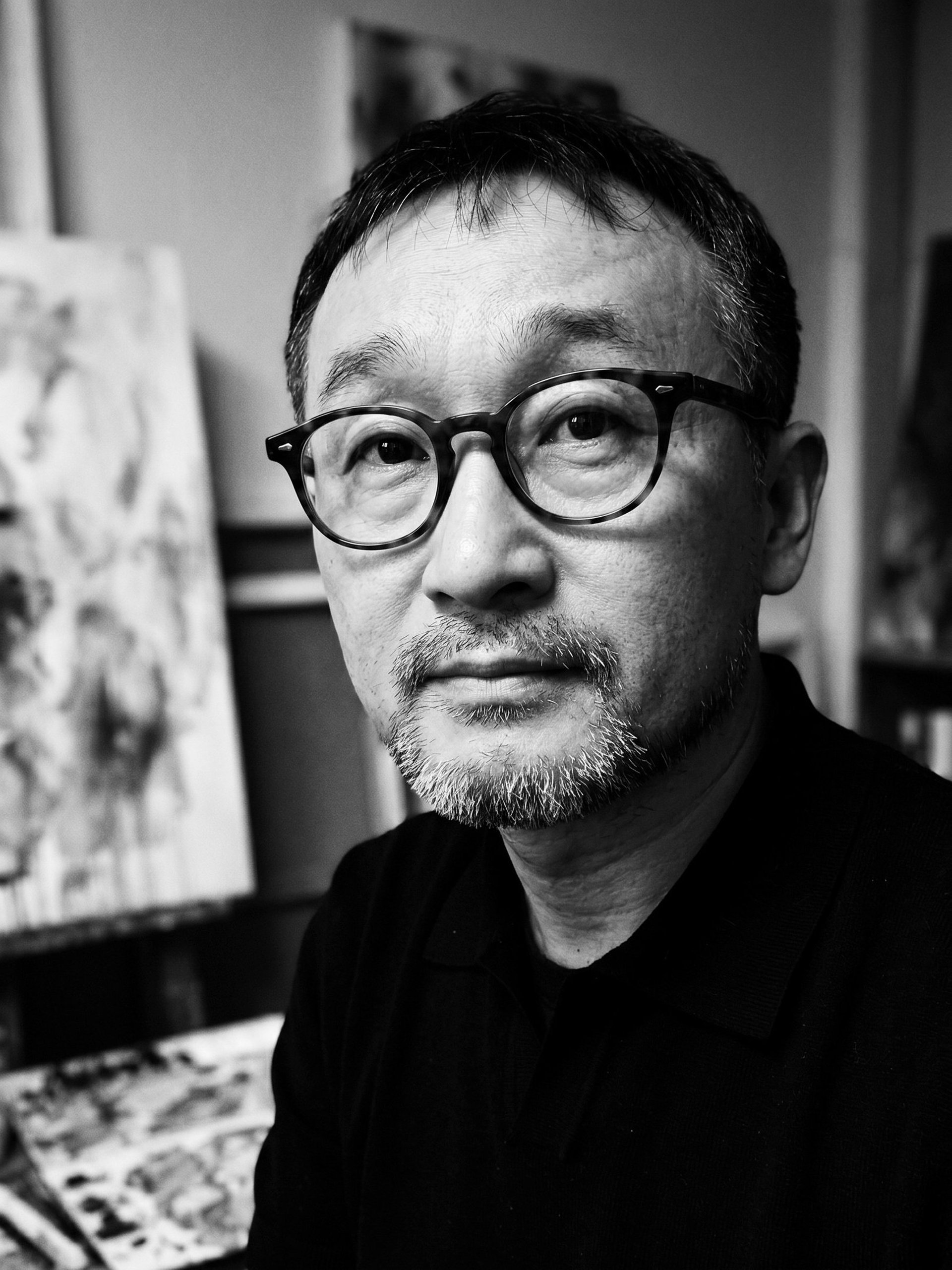
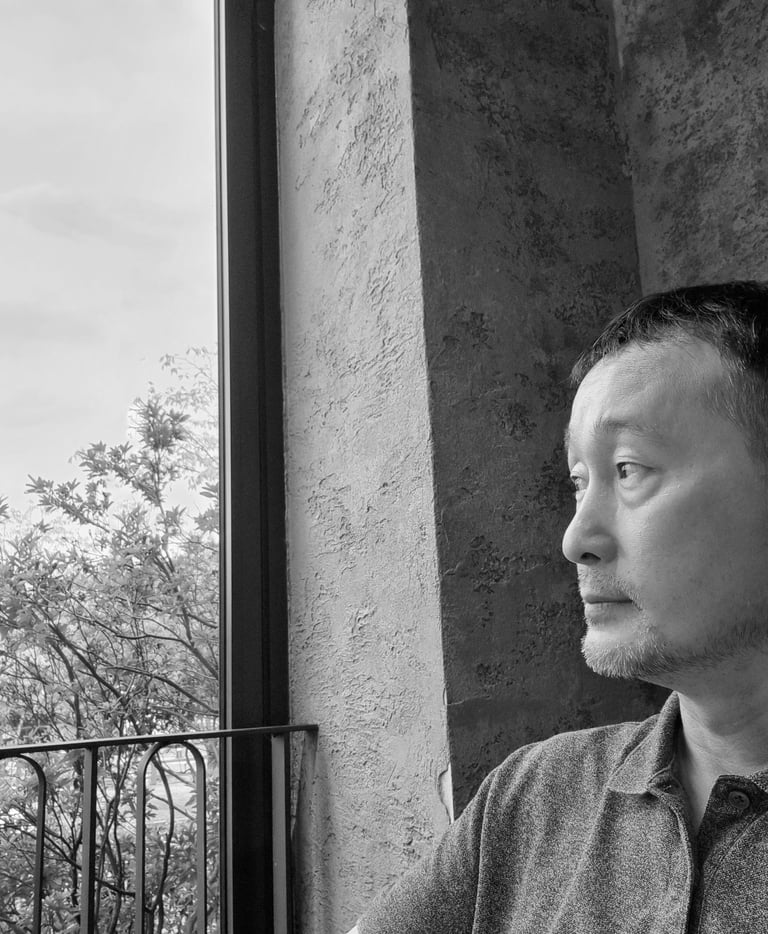
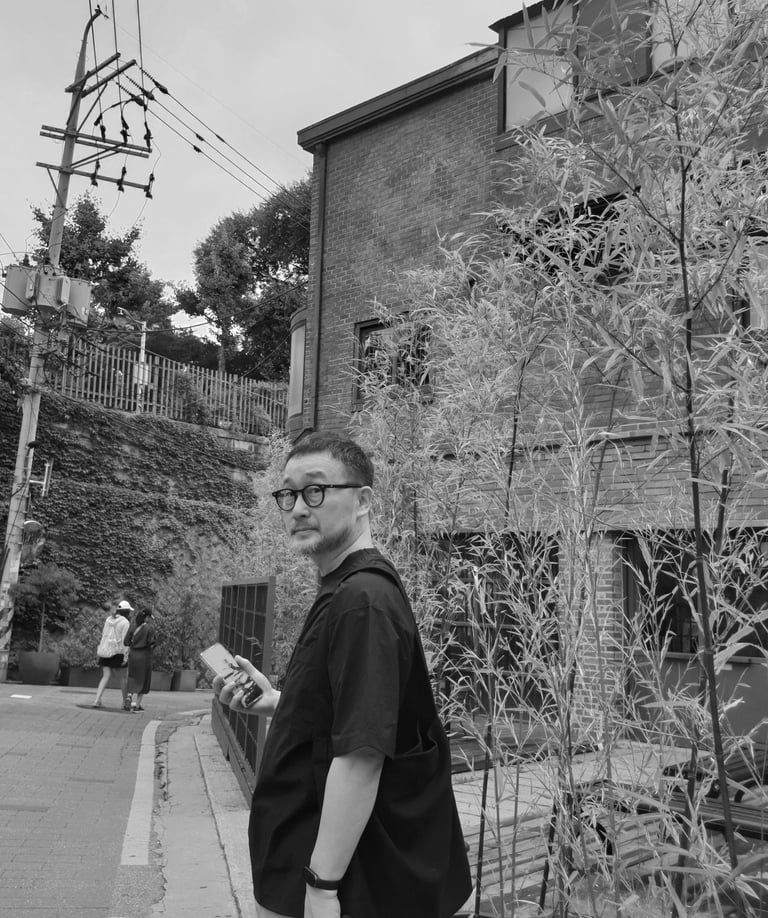
The artist grymC
Between digital creation and pictorial matter, grymC transforms emotions, memories, and lived experiences into inner landscapes. In this interview, the artist reflects on the origin of his name, his creative process, and the double translation that carries emotion into image, then image onto canvas.
INTERVIEWSPORTRAITS
Musarthis Team
6/27/20269 min read
Mardès, a house of publishing, culture, and transmission
Mardès is an inclusive and modern house that edits poetry collections, essays, magazines, and works on the art of living. It also creates cultural and artistic events that foster reflection and sharing.
Its mission is twofold: to edit and to transmit — transmitting poetry, thought, and the gestures of daily life that ease existence and enrich sensitivity.
Through its support, several Musarthis contents remain freely available, affirming a generous and elegant vision of culture.
This article is offered freely, with the support of Mardès, Swiss publishing and cultural house, and Marlena’s Code, Swiss house of elegance and poetic high perfumery.
You also seek beauty in objects or situations that are not always immediately perceived as beautiful. Why is this search important to you?
I believe this world is composed far more of difficult things than beautiful ones, far more of suffering than of brief moments of joy. This search is important because it brings art closer to honesty. To call only the beautiful things beautiful is to speak of less than half of life. If one looks at suffering only as suffering, life seems rather bleak. I think the role the artist must play is to press suffering until it yields beauty, the way black comedy wrings laughter from absurdity by twisting it out of shape.
Your recent path includes several solo and group exhibitions in South Korea, as well as international presences. What does this circulation of perspectives bring to your work?
I think of an exhibition as another stage in which a work is completed. The moment something that existed only between myself and the canvas in the studio is placed before an audience, the work finally leaves my hands and takes on a life of its own. The experience of Korean viewers and international viewers reading entirely different things from the same work never ceases to surprise me. That gap, rather than being a problem, opens the work's possibilities wider. International experiences confirm that my work is not confined to the language of a particular cultural sphere, while making it equally clear that there is still a long road ahead. That tension is the driving force that keeps me moving forward.
What emotion, sensation, or thought would you like to leave with someone discovering your work for the first time?
I do not impose a particular interpretation on the viewer. I simply hope they find it pleasing, because it's beautiful, because it contains a colour they love, or because it stirs some old memory they cannot quite name. Beyond that, I hope the work draws something out from within them. Standing before the same painting, one person feels grief and another feels liberation. I would like my work to become a mirror that quietly resonates with each person's interior. And one final thing: I want to have a conversation with the viewer through the painting. Even if we have never met, the canvas becomes the medium through which we hold a dialogue that transcends time and space. 'This is the feeling I carried when I painted this - what do you feel?'
Whether we are living in the same era, or whether decades have passed after I am gone, through the medium of painting we are able to share our emotions and speak to one another.
For grymC, painting is a form of poetry written through colour, memory and sensation. From digital experimentation to the physical canvas, he records the inner landscape of a particular moment, searches for beauty even within suffering, and leaves each work open to the viewer’s own emotions and interpretation.
Artworks from grymC
● Resonance: Attraction #2, 91 x 73cm, Mixed media on canvas, 2026
● Colors in an Ordinary Day #1, 73 x 61cm, Mixed media on canvas, 2025
● Scent of Kyoto #1, 73 x 61cm, Mixed media on canvas, 2024
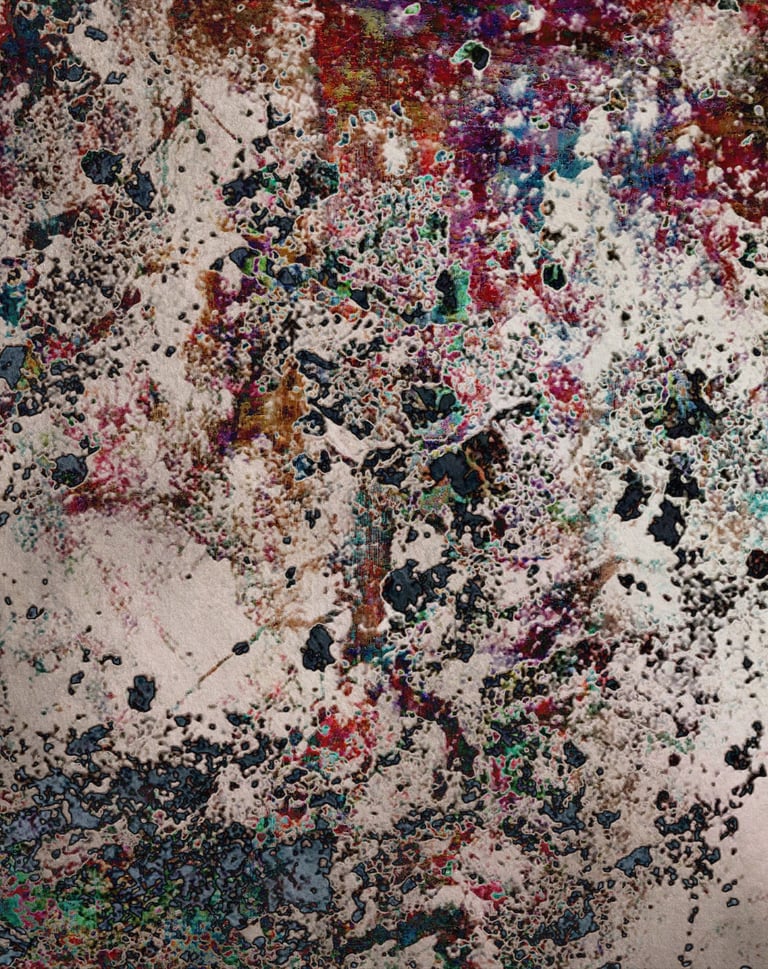
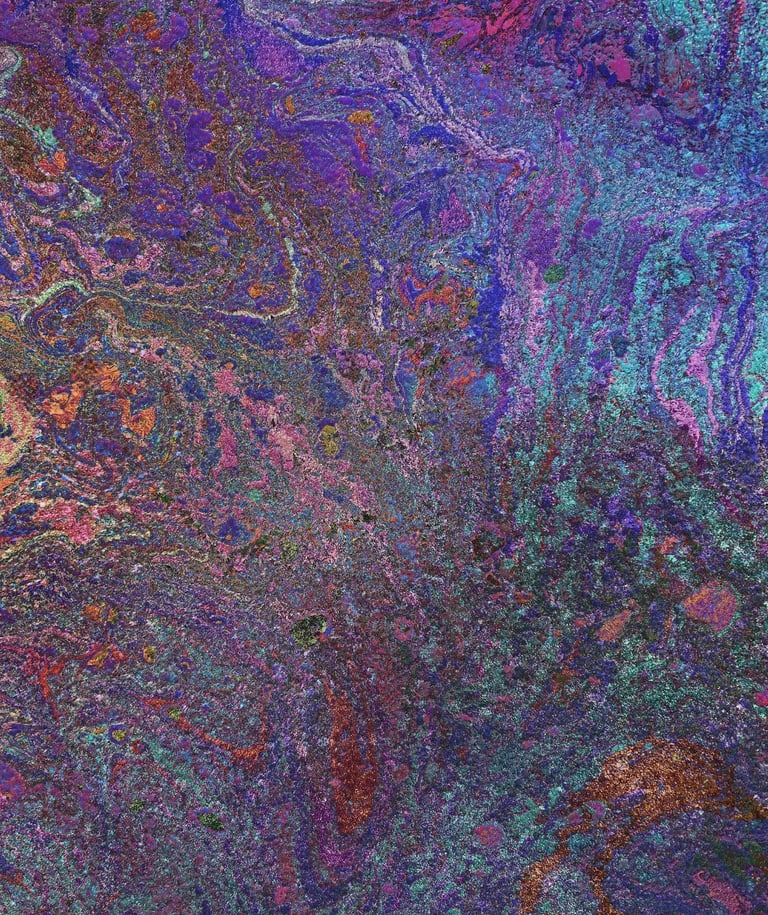
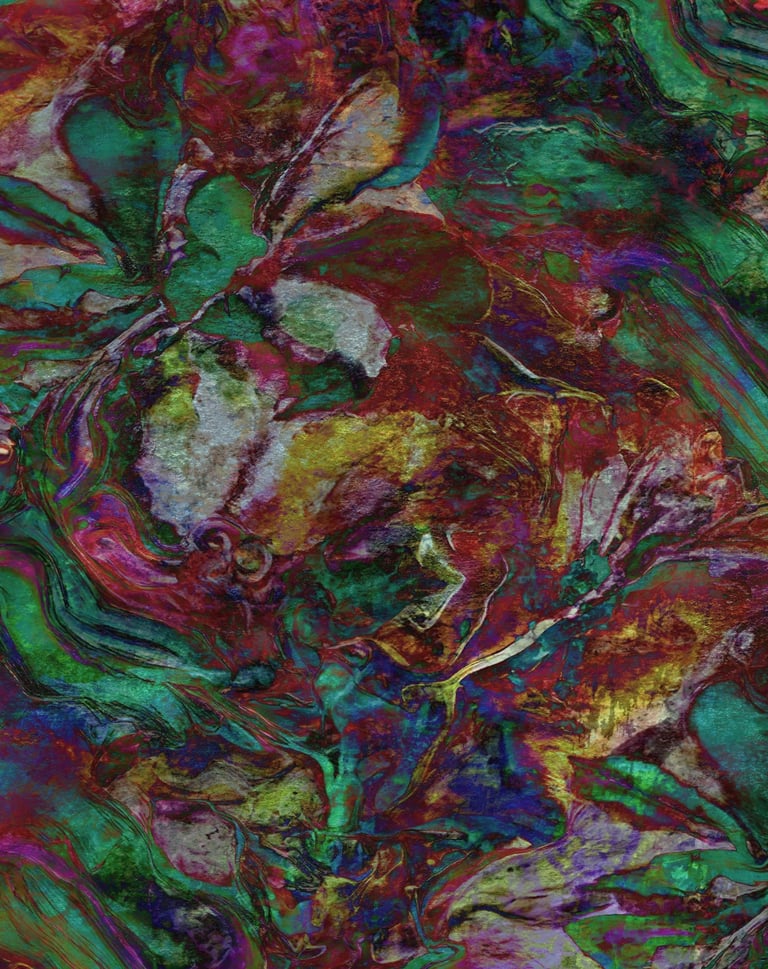
Copyright for Artwork and photos : grymc
His artist name brings painting and poetry together. His canvases hold sensations, memories, streets once crossed, and the resonance left by an encounter. The image first emerges in the digital space, where colours are layered, erased, and recomposed, before taking shape in the materiality of the canvas. The virtual and the tangible are not opposed: they take part in the same translation of the intimate.
We met grymC.
Your artist name, grymC, means "a poem written by painting." What does this idea represent in your practice today?
The name 'grymC' is a fusion of the Korean words [grim] (그림, painting) and [si] (시, 詩, poem). For me, the act of painting is fundamentally the same as writing poetry. Just as a poet selects and arranges language to construct the architecture of emotion, I build up layers of colour to give form to sensory afterimages that resist definition in words. This concept is a principle that runs through the entirety of my practice. Rather than depicting specific objects or landscapes, I translate into visual language the traces left behind by emotions and experiences, the residue of feeling after something has passed through you. The canvas is the page on which that poem is written; colour and texture are its language and its style.
You write that you create poetry through painting rather than through language. What can colour express that words cannot always convey?
Language is a powerful instrument, but it is inherently sequential. Words must be read one at a time, sentences from beginning to end. Colour, by contrast, is immediate. The entire surface enters the eye in a single moment, reaching the viewer's body and emotions directly. The tension of red and black in collision, the energy of golden light bursting outward - if you tried to explain these feelings in language, could you truly transmit them in an instant? Colour is a primal medium that bypasses the logical filter and intervenes directly in the human unconscious and senses. I am particularly drawn to colour's capacity to summon memory. Relationships with people, certain encounters from the past, emotions that once brushed against you and disappeared - for me, these things tend not to be stored as concepts but as a quality of colour, a certain tonality (⾊調).
My series 'Colors in an Ordinary Day' is a clear example of this. ‘Awakening from violet dreams, walking along the lavender blue sky road to work. In a gray office sipping reddish black coffee..‘ all the colours of an ordinary day accumulate to represent who I am as a person. Put it into sentences and it becomes a description; paint it in colour and it becomes an experience.
Your work seems to be nourished by emotions, encounters, streets, books, nature, and the works of other artists. How do these elements become images?
I think this is true of most artists, not just myself. Rather than deliberately seeking out particular subjects, I wait for the moments in daily life when something 'touches' me. The scent of an alleyway in Kyoto, a single word that stays in my chest after a long conversation with an old friend, an image conjured by one sentence in a book - these things accumulate, and when they overflow, they erupt as images in front of the canvas. The digital space serves as a kind of 'emotional laboratory' in this process. I immediately layer the rising images, stacking colours, erasing, covering again, searching for a visual structure that approaches the essence of the experience. In other words, external stimuli, without passing through logical representation, undergo a two-stage medial translation: the orchestration of pixels in virtual space and the superimposition of physical materiality on canvas, through which they finally materialise as an independent abstract object.
You describe yourself as an explorer and recorder rather than a painter. What do you wish to preserve through your works?
People try to store memory in language, but the most precious things tend to remain not as words but as sensation. I felt this acutely while working on the 'Memories' series. The face of someone who was dear to me decades ago has grown blurry, yet the quality of colour and warmth they carried remains perfectly vivid. I think of my paintings as photographs, snapshots of my inner state at the moment of making. Just as the 'Scent of Kyoto' series is not a depiction of Kyoto itself but the sensory afterglow of the journey left behind, my work is not the representation of a subject but a record of the resonance that subject set in motion inside me. The emotions and memories I felt at a particular moment in a particular place can never be identically reproduced later. Even if I were to find myself in the same place, facing the same circumstances, I would already be a different person. Consider the Beatles, whose music I admire: the contrast between their early and later work is striking. One could simply say they grew musically, but I believe their early work was music that could only have emerged from the specific time and space of their youth. Once they aged and became stars, that kind of music was no longer possible. Their later work is of course magnificent in its own right, but by then they had become different people from who they were at the start. I wish to record my own inner landscape as one person living in this era, not grand history or public events, but the emotional topography of a life. Preserving that record, in a form anyone can recognise as their own, before these emotions and memories dissolve into forgetting, that is the purpose of my exploration and documentation.
Your portfolio shows a strong attention to layers, visual textures, light, and passages of colour. How do you build a composition?
Composition does not begin with a blueprint drawn in advance. I stand before the digital canvas with a single emotional starting point, a colour, a mood, or a particular feeling. The first layer is close to pure instinct. As the second and third layers accumulate on top of it, the image begins to evolve in directions I had not anticipated. I repeat the process of dialoguing with that flow, pulling and pushing against it. Light functions as the structural skeleton of my work. Where light is born and where it is absorbed determines the weight and rhythm of the colour. The matière added with acrylic and gel medium after the work is transferred to the physical canvas is the final stage, loading the architecture of light with the thickness of reality. It is at the point where the smooth digital surface and the rough physical texture collide and coexist that the composition is finally resolved.
Your work is born from light and data, then materializes on canvas through pigment ink and certain additions of physical matter. What does this passage between virtual signals and material traces represent for you?
I call this a 'Double Translation.' The first translation is the process of converting inner emotion and sensation into digital signals: pixels, layers, data of light. The second translation is the process by which that non-material data permeates the canvas via pigment ink, and then, through the artist's hand, accumulates physical layers until it is born as a real, tangible object. Only after passing through these two translations does the work acquire an autonomous presence. The fact that my intangible emotions, sensations, and memories gain a physical body is analogous to the moment a poet completes a manuscript and enters into communion with readers. The difference is that the medium is not language but colour and texture.
Several of your series have titles related to the mind, flow, the unconscious, or colour. How does the title of a series or a work come into being?
In most cases, I do not assign the title first and then begin working. I follow my emotions and instincts through the process of making, and at some point a word or phrase rises to the surface. Rather than saying I give the work its name, I sometimes feel that the title already existed alongside the emotion or question that set the work in motion. For example, when I began the first work of the 'Euphoria' series, which I am currently developing, I was thinking of moments in life when gravity seems to disappear, an enormous joy, the electric thrill of a long-held dream coming true, and the name of that feeling became the title of the series. The title is a compass pointing in the direction the work is headed.
Scent of Kyoto (2024)
Resonance : Attraction (2026)
Colors in an Ordinary Day (2025)
Boutique : boutique.musarthis.com